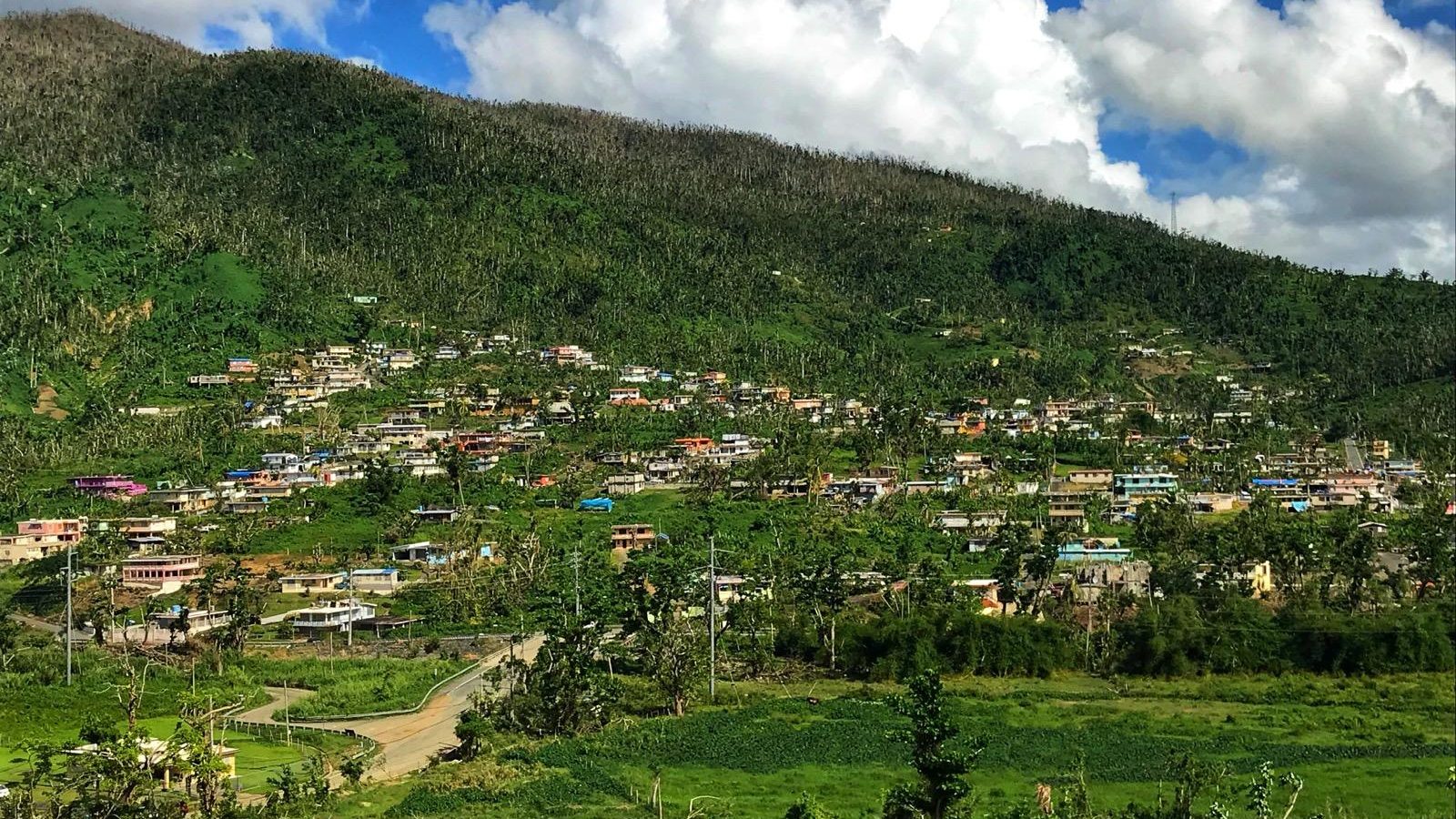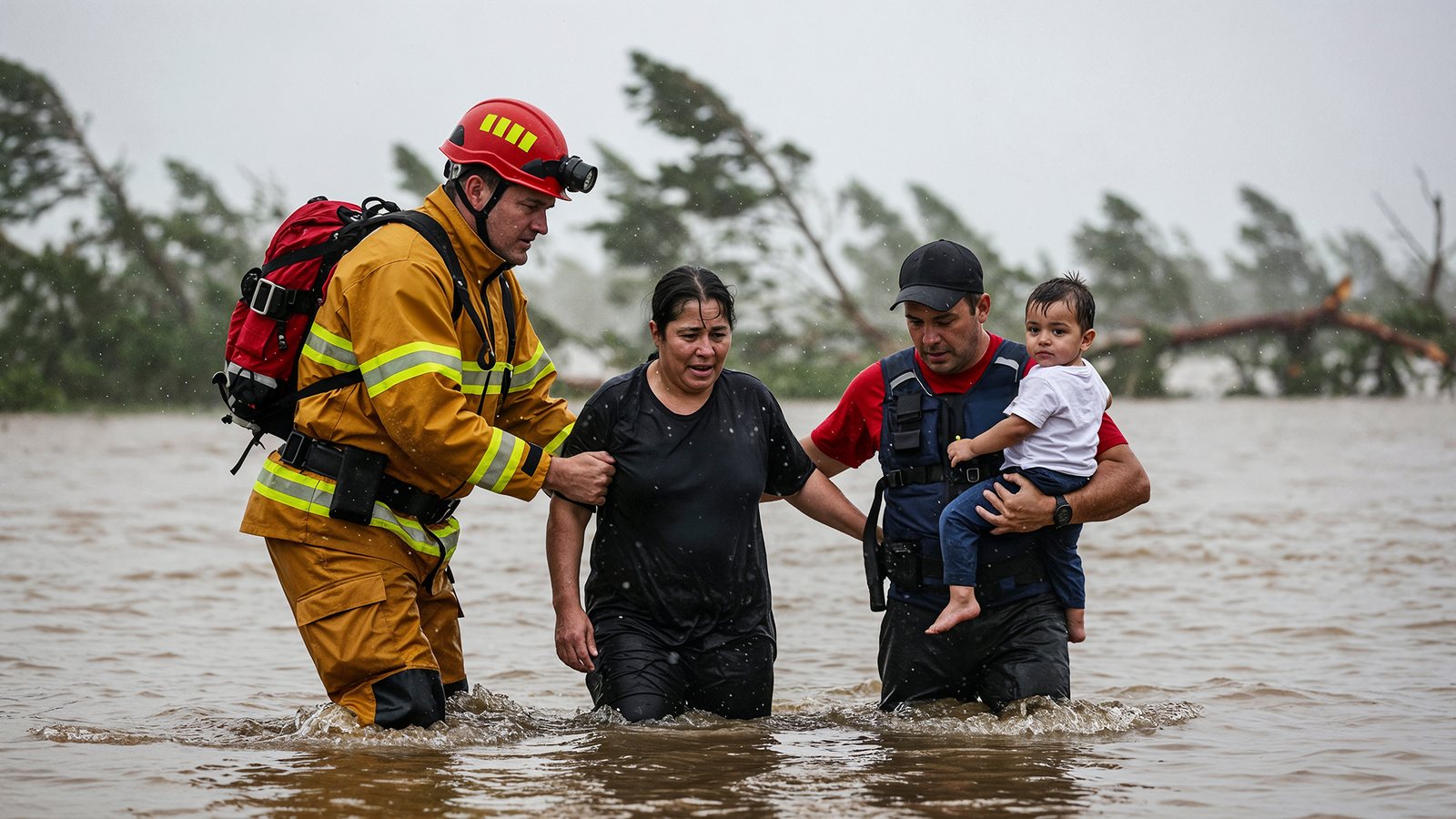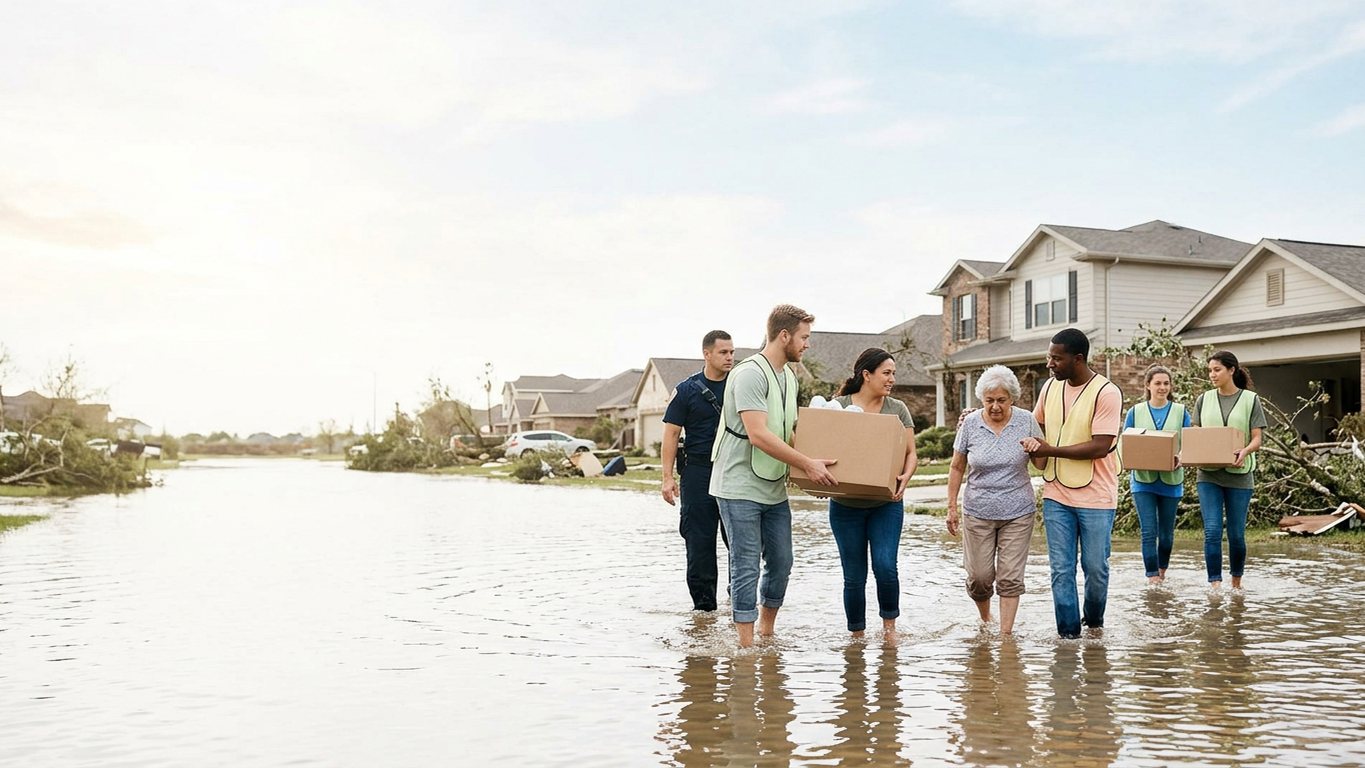
There is no hurricane. There is no named storm. On Monday, the National Hurricane Center listed no Atlantic cyclones at all. Yet by Monday afternoon, three Florida counties were under local states of emergency, the governor had declared a state emergency covering seven counties, shelters were opening, roads were closed, and a polling place had to move on the eve of Election Day.
That is the first lesson of the Treasure Coast flood. A disaster does not need a name to upend a community.
What happened
A stalled low-pressure system pulled deep tropical moisture over Florida's Atlantic coast all weekend. It arrived on top of ground already saturated by days of king tides, the astronomical high tides that brought beach erosion and high water to Martin, St. Lucie, and Indian River counties last week. When the rain came, there was nowhere for it to go.
The National Weather Service in Melbourne reported the heaviest totals around Port St. Lucie, with 6 to 10 inches, and Sebastian, with 6 to 9 inches. Those totals likely broke daily records. The standing November 2 marks were 2.63 inches at Vero Beach, set in 2009, and 2.24 inches at Fort Pierce, set in 1946. Much of the Treasure Coast picked up 3 to 4 inches, on top of 3 to 6 inches in the previous 24 hours.
The warnings tracked the storm as it unfolded. A flash flood warning covered Fort Pierce, Vero Beach, and Lakewood Park into Monday evening. A flood warning covered central Martin and south central St. Lucie counties, including Palm City, until 5:30 p.m. The flood watch for Brevard, Volusia, Indian River, St. Lucie, Martin, and Okeechobee counties was extended through 10 a.m. Tuesday, with another 1 to 3 inches possible and some spots at risk of 5 inches or more. Rain chances sit near 60 percent on Tuesday, Election Day, and near 50 percent into Wednesday.
Just to the north, Brevard County saw the worst of it: 15 to 22 inches of rain and a Flash Flood Emergency, the Weather Service's most severe flood alert, for West Melbourne, Palm Bay, and Grant-Valkaria. Radar estimated 18 to 20 inches in 12 hours south of Palm Bay, a rate NOAA classifies as a 1,000-year event. The Treasure Coast was spared that extreme, but not the flooding.
Three layers of emergency declarations moved on the same day, and residents should understand what each one does.
The local layer: Martin, St. Lucie, and Indian River counties each declared local states of emergency on November 2 and activated their emergency operations centers, with St. Lucie County at a Level 2 partial activation. Indian River County's declaration took effect at 2:30 p.m. A local declaration is not symbolic. It positions a county to seek state and possibly federal funding for its response costs.
The state layer: Governor Ron DeSantis declared a state of emergency Monday for seven counties: Brevard, DeSoto, Hardee, Highlands, Indian River, Martin, and St. Lucie. The order, Executive Order 26-227, is effective immediately for 60 days. Palm Beach County was not included, though the order can be amended to add counties as damage assessments come in, and those usually take days.
The federal layer: as of Monday evening, no federal declaration had been announced. That should not surprise anyone who has followed this year. Federal help follows a process of local damage assessments, a governor's request, and a presidential decision, and that takes time. Today's declarations unlock state and local resources. They do not, by themselves, put federal money in a family's hands.
On the Ground
In Fort Pierce, Virginia Avenue is closed in both directions between South 35th and South 25th streets. All city parks, beach access points, and recreational facilities are temporarily closed, including the River Walk Center and the Fort Pierce Recreation Center.
In Port St. Lucie, California and Savona boulevards are closed, along with Port St. Lucie Boulevard and Aviation Avenue, and police reported flooding on neighborhood streets from Southwest Airoso Boulevard to Tradition. St. Lucie County's Area Regional Transit service is suspended, and county offices, libraries, and facilities will be closed Tuesday.
Indian River County opened two shelters at 6:30 p.m. Monday, at Sebastian River Middle School and Osceola Magnet School.
After 8 p.m. Monday, the Indian River County Sheriff's Office announced a voluntary evacuation for the Rockridge neighborhood — 17th Street to 13th Place, 6th Avenue to Indian River Boulevard — because of flooding and possible wastewater backups. Schools in Indian River and Martin counties are closed Tuesday, as are Fort Pierce administrative offices. Martin County government offices, including the clerk and tax collector offices, are also closed Tuesday, and 19th Circuit court proceedings are cancelled Tuesday except for essential court services.
As of Monday, no Treasure Coast county had reported water entering homes. But roads, not living rooms, are where floodwater kills. Do not drive through flooded streets. Turn around. A car can be replaced. A life cannot.
This is important: If you vote Tuesday
Flooding has moved polling places across all three counties for Election Day, Tuesday. Polls are open from 7 a.m. to 7 p.m. In Indian River County: Precinct 7, the Sebastian Church of God, 281 Delaware Ave., will vote at Sebastian Elks Lodge No. 2714, 713 South Fleming Street, which also serves Precinct 8; Precinct 26, Morning Star Church, 698 Timber Ridge Trail, will vote at the Intergenerational Recreation Center Room 112, 1590 Ninth Street Southwest, which is used by Precinct 25. In St. Lucie County: Precinct 12, the Fort Pierce Masonic Lodge, will vote at Precinct 25, Days Inn Midtown, 3224 S. U.S. 1, Fort Pierce; Precincts 49, 71 and 51, Oak Hammock K-8 School and the Disabled American Veterans Hall, will vote at Precinct 45, the Port St. Lucie Community Center, 2195 S.E. Airoso Blvd., Port St. Lucie; Precincts 67 and 86, St. Lucie West Centennial High School, will vote at Indian River State College, Veterans Center of Excellence, 500 N.W. California Blvd., Port St. Lucie; Precinct 83, the Paula A. Lewis Library, and Precinct 92, the Brennity at Tradition, will vote at Tradition Town Hall, 10799 S.W. Civic Lane, Port St. Lucie. In Martin County: Precinct 2, Grace Presbyterian Church, 1875 N.W. Britt Road, will vote at the Martin County Supervisor of Elections Office, 135 S.E. Martin Luther King, Jr. Blvd., Stuart. Check with your county elections office before you leave, because flooding can change plans overnight.
I have spent more than three decades in disaster work, and what I see on the Treasure Coast is what I now see everywhere. The disaster is no longer only the hurricane with a name and a forecast cone. It is rain on saturated ground. It is a tide cycle that eats the beach, followed by a storm with nowhere to drain. It is an El Niño winter, the same pattern behind Hawai'i's year of disasters, which the South Florida Water Management District's lead meteorologist says could bring a record wet winter and volatile weather into early spring.
Preparedness is not a reaction to a forecast. It is built in ahead of time: harden the structure, plan for power and water continuity, know your occupant protocols, and write your recovery playbook before you need it. When the water comes, document everything from day one, including photos, receipts, and a call log. Claims are won or lost on documentation, and documentation starts while the street is still flooded, not weeks later when the adjuster arrives.
If you need help tonight, the American Red Cross serving Palm Beach and the Treasure Coast is available around the clock at 1-800-733-2767. Follow your county emergency management updates for shelters, closures, and road conditions. Those change by the hour, and no article can replace your county's latest word.
The Treasure Coast flood has no name. It does not need one. Rain, tide, saturated ground, and three counties under emergency declarations are more than enough reason to take it seriously.
Where to find help
If you or your community need help with disaster relief, recovery, or preparedness, you can find solutions at R3sults.com and R3sults.org. Reach him at hv.tremble@r3sults.com or by phone: Business +1 954-231-1750, Mobile +1 347-874-6296.
Available for consultations, operational support, crisis problem-solving, public speaking, and podcast appearances. Serving all tiers of government, commercial enterprises, and residential communities in disaster relief management and preparedness. From local community planning to large-scale federal response: no job is too big or too small.