Today is day twenty-one.
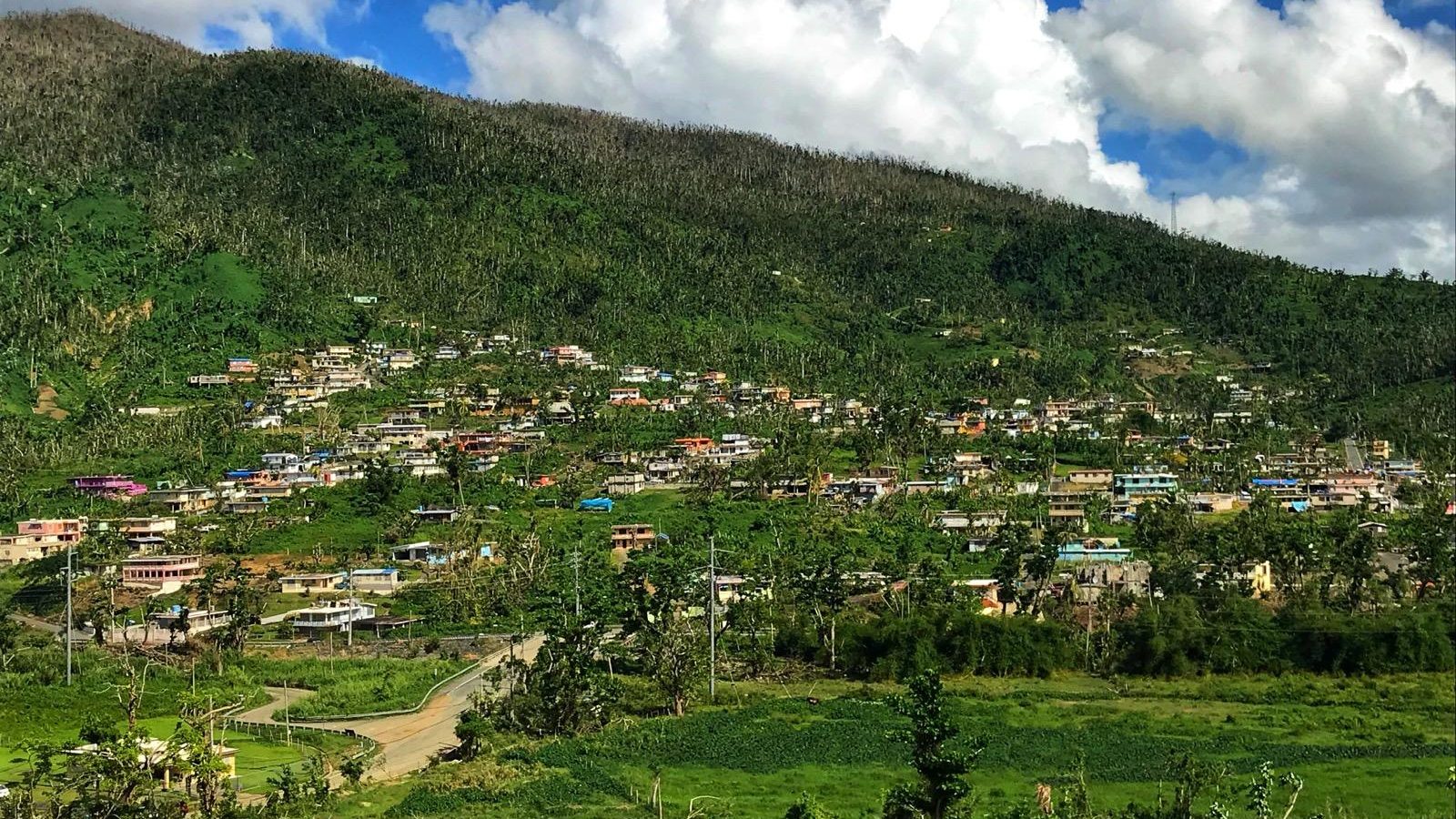
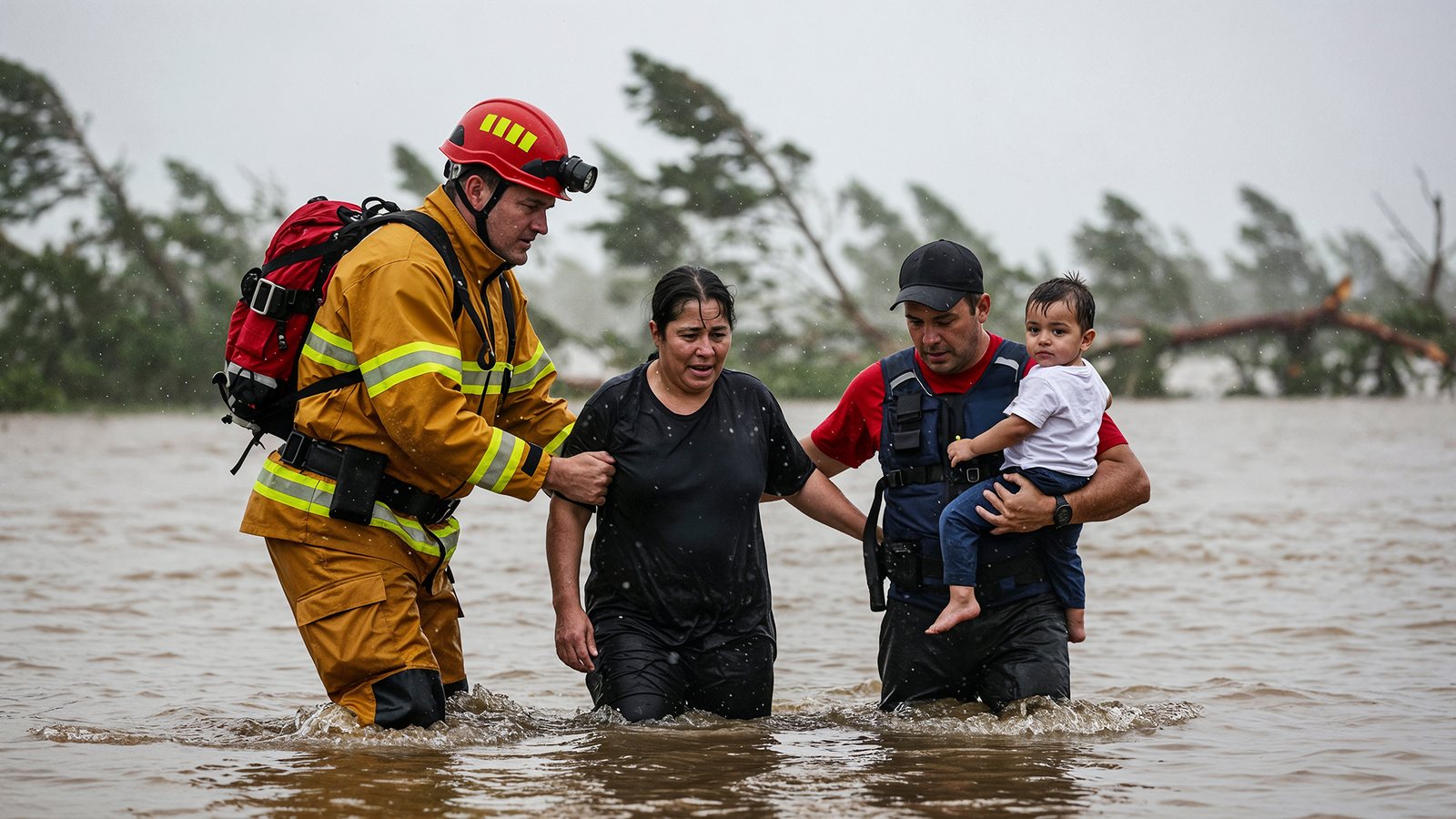
Three weeks ago tonight, Hurricane Isaias came ashore near Destin as a Category 2 storm, with gusts reported at 117 mph at Oriole Beach and more than 400,000 Florida customers losing power at the peak. Six storm-related deaths have been reported. In Milton alone, city officials estimate 400,000 to 500,000 cubic yards of debris still await removal.
That is what three weeks looks like when the cameras have moved on: the work is still there, knee-deep, every day — and the help families were told to expect is only half-arrived.
A declaration, in two parts
On October 27, the President signed a major disaster declaration for Florida, FEMA-4955-DR, covering the October 6–12 incident period. It approves Public Assistance for 15 counties: Bay, Calhoun, Escambia, Franklin, Gadsden, Gulf, Holmes, Jackson, Jefferson, Liberty, Okaloosa, Santa Rosa, Wakulla, Walton, and Washington.
That matters. Public Assistance reimburses state and local governments — and certain nonprofits — for emergency work, debris removal, and repairs to damaged public roads, buildings, and utilities. Counties can now move from spending their own money and hoping, to documenting costs for reimbursement. It is real progress, and it took eighteen days from landfall to get here: an emergency declaration on October 9, a state request on October 16, a signature on October 27.
But here is the part that must be said plainly, because it changed after this draft was first written: the October 27 signature did not by itself open help for households — that took two more days.
On October 29, the Florida Division of Emergency Management announced that Individual Assistance — the program that pays residents directly for temporary housing, basic home repairs, and other necessary disaster expenses — is now approved for all eight requested counties: Bay, Escambia, Gulf, Holmes, Okaloosa, Santa Rosa, Walton, and Washington. Hazard mitigation funding remains under review.
Approval opened the household track. Residents can apply via DisasterAssistance.gov, the FEMA app, or 1-800-621-3362 (the online link lagged the announcement). So the honest position on day twenty-one is narrower than this draft first said, and more hopeful: the household track is approved.
Anyone telling Panhandle families they can already file, or that household help is still unapproved, is now behind the facts in opposite directions. The distinction between the two programs is not bureaucratic trivia. It is the difference between a county getting its debris bill reimbursed and a family getting a roof — and between an approved program and an open one.
The insurance clock is already running
While federal household applications move forward, the insurance clock does not wait. Reporting cited by the News Service of Florida puts insured losses in Florida near $582 million, with more than 55,000 claims filed statewide — about 26,000 in Santa Rosa County and nearly 17,000 in Escambia County. Separate reporting on Florida Office of Insurance Regulation data as of October 20 put nearly 8,500 claims closed without payment, with roughly 43,000 still open.
Those numbers are the recovery cliff in real time. Every open claim is a roof still exposed to the next rain. Every closed-without-payment claim is a family that must decide whether to fight, pay out of pocket, or live with the damage. And every week that passes degrades the evidence: tarps shift, mold spreads, and the line between storm damage and “wear and tear” — the adjuster’s favorite distinction — gets harder for a homeowner to prove.
This is why the first article in this series insisted on days 14 to 90 as the decisive window. We are now in it. The families who document correctly now — photographs before and after temporary repairs, receipts kept, every conversation with a carrier noted with a date and a name — will be the families whose claims and whose FEMA applications survive scrutiny. The families who wait for a single program to save them will fall behind on all of them.
What to do now that Individual Assistance is approved
If you are in the Panhandle, do not wait for the application portal to act:
- Report your damage to your county now, if you have not already. Damage reporting is still the record that supports assistance. Unreported damage does not count.
- Work your insurance claim as your primary track today. It is the claim that is actually open. File, document, and appeal a denial in writing rather than accepting it by phone.
- Keep every receipt. Temporary repairs, tarping, lodging, and cleanup costs are the paper trail for both insurance and the FEMA program.
- Watch your county emergency management channel and FloridaDisaster.org for application updates — not social media summaries that either say household help is still unapproved or claim you can already file.
- Do not pay a contractor in full up front, and do not sign away your claim to anyone who promises to “handle FEMA” for you.
For local governments, the October 27 decision changes the job in a different way: the reimbursement track is now open, so the discipline shifts to documentation — eligible costs, procurement records, and debris quantities, like Milton’s 400,000-plus cubic yards, recorded properly the first time. Sloppy paperwork now becomes denied reimbursement later.
The lesson, three weeks in
Isaias did not expose a failure of response. Roads reopened by dawn. More than 350,000 meals and 33,000 tarps were distributed, and roughly 1,900 state response missions were completed. The response worked.
What Isaias exposes, again, is the recovery sequence: eighteen days for a partial declaration, twenty days for the household program to be approved, and applications directed through DisasterAssistance.gov, the FEMA app, or 1-800-621-3362 — while an insurance system processes tens of thousands of claims and families live under tarps. The system is not designed to move at the speed of a leaking roof.
That is fixable, and the fix is the one this series keeps returning to: pre-register households for Individual Assistance while an emergency declaration is in effect, so applications can be processed the hour a major declaration signs; fund trained recovery navigators from day fourteen, not as a disaster-by-disaster improvisation; and measure recovery by time-to-housing and time-to-claim-settlement, county by county, in public.
Until then, the honest message to the Panhandle on day twenty-one is twofold, and both halves matter: the government recovery track is open, and the household track is approved — with applications open through DisasterAssistance.gov, the FEMA app, or 1-800-621-3362. Saying only the first half is how trust is lost. Saying both, and acting on both, is how recovery actually starts.
Where to find help
If you or your community need help with disaster relief, recovery, or preparedness, you can find solutions at R3sults.com and R3sults.org.
Herbert V. Tremble is available for consultations, support, problem solving, public speaking, and podcasts at all levels — government, commercial, and residential — for disaster relief management and preparedness. Reach him at hv.tremble@r3sults.com or by phone: Business +1 954-231-1750, Mobile +1 347-874-6296. No job is too big or too small.
Herbert V. Tremble is the founding principal of R3SULTS, a disaster management technology ecosystem, and has worked as a consultant, contractor, and subcontractor on disaster response and recovery for more than three decades, through Iron Butterfly Group LLC and Iron Butterfly Consultants LLC.
Sources and status note (updated October 31, 2026): FEMA-4955-DR signed October 27, 2026, Public Assistance for the 15 counties listed; Individual Assistance approved October 29, 2026, for Bay, Escambia, Gulf, Holmes, Okaloosa, Santa Rosa, Walton, and Washington, as announced by the Florida Division of Emergency Management and reported by the Pensacola News Journal and Walton County Emergency Management, with applications via DisasterAssistance.gov, the FEMA app, or 1-800-621-3362 (the online link lagged the announcement); hazard mitigation still under review. Incident period October 6–12, 2026; Federal Coordinating Officer Brett H. Howard. Landfall near Destin October 9, 2026, as a Category 2 storm; emergency declaration EM-3655-FL October 9, 2026; state major-disaster request October 16, 2026. Debris, meals, tarps, and mission figures via Florida Division of Emergency Management reporting cited October 29, 2026. Insurance figures via News Service of Florida and Florida Office of Insurance Regulation data as reported October 20–29, 2026; portal status was conflicting across sources as of October 31, 2026, so this version directs readers to all three application channels.